
Used-Car Inspection Checklist for South African Buyers
A viewing sequence for documents, service history, bodywork, tyres, equipment and the test drive, with questions to resolve before paying.
What matters most
- Check documents and service records before you fall in love with the car.
- Inspect in daylight, test the equipment and drive it on a sensible agreed route.
- Record each concern and who will resolve it. Get important promises in writing before paying.
- A roadworthy certificate is useful, but it does not replace a detailed pre-purchase inspection.
This used-car inspection checklist is a practical sequence for a South African viewing: paperwork first, then condition, a test drive and the final agreement. Use it to organise your questions and decide when you need expert help.
Take a phone for notes, a torch, your buying brief and someone whose judgement you trust. Arrange enough time, daylight and a clean, dry vehicle. Ask permission before photographing documents and keep private information out of shared notes.
In this guide
Before the viewing: make the visit worthwhile
- Confirm the exact model, derivative, year, transmission, mileage and advertised price.
- Ask whether the vehicle is available and whether service and registration records can be inspected.
- Ask about known faults, body repairs and any outstanding finance.
- Confirm a test drive and discuss an independent inspection if you want one.
- Get an insurance estimate and establish the full purchase costs before committing.
Avoid paying a rushed deposit on the strength of photographs alone. If a reservation is genuinely needed, first verify the seller and get the amount, conditions and refund terms in writing.
1. Match the documents and service records
Match the VIN and vehicle details on the registration information to the actual car. Clarify who owns it, who is entitled to sell it and how any lender’s interest will be settled. If details conflict, stop and resolve them through the appropriate authority or lender before proceeding.
Next, read the service record as a timeline. Each entry should have a date and mileage, supported by invoices where available. Ask about gaps, major maintenance and the next service due. Verify suspicious entries directly with the workshop using independently obtained contact details, subject to the owner’s consent and the workshop’s disclosure rules.
Watch: low mileage still needs servicing
Elso’s service-history video uses a Ford Ranger example to explain distance and time intervals. The key is whichever interval the manufacturer specifies comes first—not mileage alone.
Use the schedule for the exact car. The video’s example is not a universal interval, and an informal allowance for a late service does not override manufacturer or warranty requirements.
A simple record check: Write “date / mileage / work done / evidence / next due” for each service. A low odometer reading does not explain a gap of several years.
2. Walk around the bodywork and tyres
Compare paint colour, texture and panel gaps from both sides. Open the doors, bonnet and boot. Look for overspray, damaged seals, unusual seams and water in the spare-wheel well. Replaced parts need an explanation, rather than an instant conclusion about accident damage.
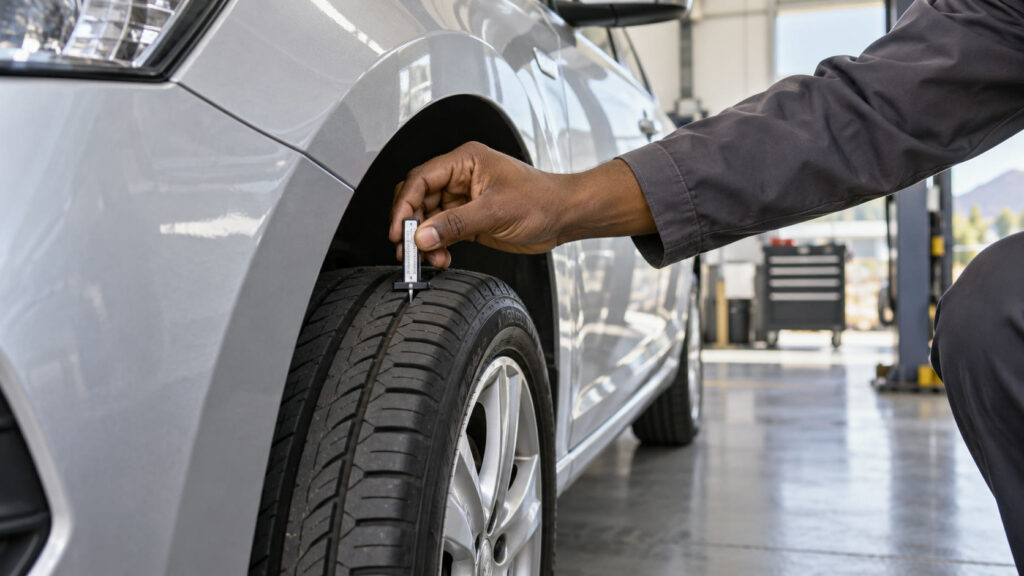
Inspect visible tyre tread and sidewalls, including the spare or repair kit supplied. Ask about tyre age, uneven wear, damage and the correct specification. Uneven wear can have several causes and should be assessed. Our accident-repair guide explains the bodywork clues in more detail.
Record chips, dents and wheel damage so the condition at agreement is clear. Do not crawl beneath an unsupported vehicle; underbody checks belong on suitable workshop equipment.
3. Try the cabin and every useful feature
- Test the windows, mirrors, locks, lights, wipers, air-conditioning and infotainment.
- Check all seats and accessible seatbelts, including the rear seats you will use.
- Watch the dashboard during start-up and ask about warning lights or missing self-check indications.
- Notice damp smells, wet carpets or unexplained heavy wear relative to the stated mileage.
- Confirm the spare keys, handbook, tools and accessories included in the sale.
- Test your actual luggage or child-seat requirements with the seller’s permission.
A warning lamp that goes out is not a complete diagnostic assessment. Ask a qualified technician to investigate faults and explain the findings.
4. Assess the engine and the test drive
Ask whether the engine can be viewed from a cold start; if it is already warm, ask why. Listen for unusual noises and look for visible leaks without touching hot or moving parts. Never open a hot cooling-system cap. A clean engine bay can make inspection easier, but cleanliness alone proves little about condition.
Agree a safe route and confirm the test-drive requirements. At normal speeds, assess steering, gear changes, acceleration, braking, vibration and temperature indications. Try parking and low-speed manoeuvres too. Record symptoms instead of guessing a repair cost.
| Observation | Useful follow-up |
|---|---|
| Steering pull or uneven tyres | Ask for a tyre, alignment and suspension assessment. |
| Delayed or harsh gear changes | Ask a specialist to assess the transmission and service record. |
| Persistent warning light | Request diagnosis and written findings, rather than simply clearing the code. |
| Noise, leak or overheating concern | Pause the purchase pending a qualified assessment. |
Choose the right independent inspection
Ask what the inspection includes and excludes: diagnostic scan, road test, underbody, brakes, suspension, bodywork and service-record review. DEKRA’s technical inspection is a separate service from its roadworthy test, and its stated scope has limits. No ordinary non-invasive inspection can guarantee every internal component’s future life.
At Elso Cars, the FAQ describes an RMI-approved workshop inspection, road test, full service history and included roadworthy. Ask for the checks and any remedial work on the individual car.
5. Close the gaps before paying or signing
Put the full price, fees, included accessories, agreed repairs, delivery conditions and any optional products into the written agreement. If a fault will be fixed, define what will be done and when, and how completion will be checked.
Read warranty terms: covered components, limits, exclusions, servicing obligations, excesses and the approval process for claims. A verbal “everything is covered” is not a policy. The seven warning signs guide helps you decide which unresolved issues warrant a pause.
Your final viewing notes
| Check | Record before deciding |
|---|---|
| Identity and seller | Details matched; authority to sell and finance position clarified |
| History | Records reviewed; gaps explained; next maintenance identified |
| Condition | Bodywork, tyres, cabin and equipment concerns noted |
| Drive and inspection | Symptoms investigated; written findings understood |
| Agreement | Full costs, repairs, cover and handover conditions written down |
Frequently asked questions
Is a roadworthy certificate enough before buying?
It does not replace a detailed assessment of mechanical condition, repair history or future maintenance. Establish what was inspected and arrange additional checks where needed.
Should I reject a car with a service-history gap?
First establish what is missing and whether it can be verified. A gap increases uncertainty; a promise that “it was serviced” is not evidence. Consider the manufacturer’s schedule, inspection findings and your tolerance for risk.
What if the seller refuses an independent inspection?
Ask whether there is a reasonable practical concern and propose a workable arrangement. If a sensible inspection cannot be agreed or you feel pressured to pay first, pause the deal and consider another car.
Reviewed 8 October 2026 using Elso Cars’ service-history video and FAQ, plus DEKRA’s inspection-service descriptions. This checklist organises a viewing; specialist findings are needed for technical concerns.