
How to Check If a Car Has Been in an Accident
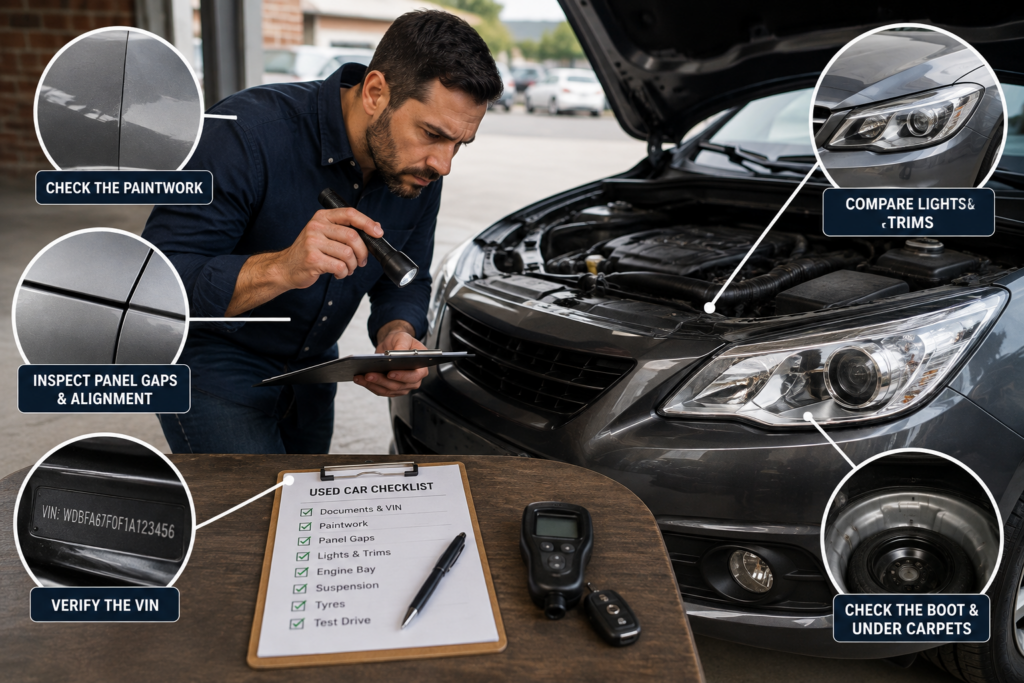
You can often spot signs that a used car has been in an accident, but you should not rely on one check alone. In South Africa, accident history is not always recorded neatly against a vehicle’s VIN, and some repairs never appear in a public database. The safest approach is to combine a physical inspection, paperwork checks, vehicle history checks and an independent inspection before you buy.
This guide from Elso Cars explains what to look for, what a clean report can and cannot prove, and when to walk away.
Quick Answer: Can You Check If a Car Has Been in an Accident?
Yes, you can reduce the risk by checking the bodywork, paint, panel gaps, lights, boot, engine bay, tyres, suspension, VIN, service history and ownership documents. You can also use vehicle history tools and professional inspections. What you cannot do is prove with total certainty that a car has never had accident damage, because not every repair or claim is recorded.
A car should only be treated as low risk when the visual inspection, documents, seller answers, service records and professional inspection all tell the same story.
Start With the Paperwork and VIN
Before inspecting paint or panels, confirm that the car is the car being advertised. Ask for the NaTIS or registration documents and check that the VIN, chassis number and engine number match the vehicle.
- Check the VIN on the licence disc and body against the documents.
- Check that the engine number matches the documents.
- Look for signs of tampering around VIN plates or stamped numbers.
- Ask for the service book and invoices.
- Ask whether the car has had body repairs, insurance claims or structural work.
- Be cautious if the seller avoids direct answers.
If the documents do not match the vehicle, pause the deal until the issue is properly explained and verified.
Understand Code 2 and Code 3 in South Africa
South African used cars are commonly described with e-NaTIS status codes. Code 2 generally refers to a normal used vehicle. Code 3 refers to a built-up or rebuilt vehicle, often after accident, flood or serious damage, followed by clearance and roadworthy steps.
A Code 3 vehicle can be difficult to finance or insure, and its value is usually lower than a comparable Code 2 vehicle. However, a Code 2 car can still have had accident repairs, especially if the repair was private or not recorded through an insurer. That is why code status is useful, but not enough on its own.
Check the Paintwork
Paint often reveals a repair before the seller does. Inspect the car in daylight, not under weak indoor lighting. Walk around slowly and compare one panel with the next.
- Look for colour differences between doors, wings, bumpers and the bonnet.
- Check for dull patches, excessive shine or uneven orange-peel texture.
- Look for overspray on rubber seals, window trims, lights and wheel arches.
- Check whether the bonnet or front bumper looks too new for the mileage.
- Run your hand gently across panels to feel texture changes.
A respray does not always mean major accident damage. It may have been done for scratches or stone chips. The concern is when paint clues appear together with uneven gaps, new lights, poor alignment or hidden structural marks.
Inspect Panel Gaps and Alignment
Panel gaps should be fairly even from left to right. Compare the gaps around the bonnet, boot, doors, wings and bumper edges.
- Check whether one side gap is wider than the other.
- Look for doors that sit proud or too deep compared with nearby panels.
- Open and close every door, the bonnet and the boot.
- Listen for scraping, catching or unusual resistance.
- Check whether badges are missing, crooked or freshly replaced.
Poor alignment can point to rushed panel replacement or deeper structural movement.
Compare Lights, Trims and Glass
A newer headlight on one side can mean that corner was repaired. Compare left and right headlights, taillights, fog lights, mirror covers, bumper inserts and plastic trims.
Also check glass dates where visible. One replaced window does not prove an accident, but several mismatched parts should prompt more questions.
Look in the Boot and Under Carpets
Accident repairs are sometimes easier to hide from the outside than from inside the boot. Lift the boot carpet and check the spare wheel well, rear panel and inner seams.
- Look for rippled, hammered or wrinkled metal.
- Check for uneven seam sealer.
- Look for fresh paint inside hidden areas.
- Check for missing clips or cracked trims.
- Smell for dampness, which can point to water leaks or flood damage.
Check the Engine Bay and Front Structure
Open the bonnet and compare parts on both sides. New brackets, headlights, radiator supports, bumper reinforcements or suspension parts can be normal replacement items, but they deserve an explanation.
- Look for fresh paint around the inner wings or front panel.
- Check whether bolts have tool marks or broken paint.
- Compare left and right suspension towers.
- Look for leaks, bent brackets or missing fasteners.
- Check whether parts look much newer than surrounding components.
Use the Tyres and Test Drive as Clues
Uneven tyre wear can suggest alignment or suspension problems, which may follow pothole damage or accident repairs. During the test drive, pay attention to steering pull, vibration, braking stability, knocks and unusual noises.
A proper test drive should include town speeds and, where safe, a faster road section. A short loop around the block is rarely enough.
Use Vehicle History Checks, But Know Their Limits
A vehicle history report can help identify recorded repair history, stolen status, police interest, outstanding finance, mileage concerns, valuation clues and written-off status. Tools such as VIN lookup services, FirstCheck, TransUnion-style checks, SAIA salvage database checks and similar services can be useful.
The limitation is important: not every accident is insured, not every repair is recorded, and some database updates can be delayed. A clean report is useful, but it does not replace a physical inspection.
When to Get an Independent Inspection
If you are serious about a used car, an independent inspection is often worth the cost. Consider a professional inspection if the vehicle is expensive, has mismatched paint, has panel-gap concerns, has missing service records, has high mileage, or if the seller’s answers do not feel consistent.
Look for a qualified mechanic, body repair specialist, DEKRA-type inspection, AA-style multi-point inspection or another trusted inspection provider. The small upfront cost can protect you from a much larger mistake.
When to Walk Away
- The VIN, engine number or documents do not match.
- The seller refuses an independent inspection.
- The car pulls strongly to one side on a test drive.
- There are signs of structural repair in the boot, chassis areas or engine bay.
- The airbags, warning lights or safety systems raise concerns.
- The seller cannot explain repairs or service-history gaps.
- The price is far below market with pressure to decide immediately.
Accident-Damage Checklist
- VIN and engine number match the documents.
- No signs of VIN tampering.
- Service book and invoices support the mileage.
- Paint colour and texture are consistent.
- Panel gaps are even from side to side.
- Lights and trims match in age and condition.
- Boot floor and hidden panels are smooth.
- Engine bay structure looks even and untampered.
- Tyres wear evenly.
- The car drives straight and brakes cleanly.
- History check results match the seller’s story.
- Independent inspection does not reveal structural concerns.
Photo and Diagram Notes for the Final Page
This page should include original photographs or simple diagrams wherever possible. Add images near the sections they support rather than grouping them at the end.
- Photo: even vs uneven panel gaps around a bonnet or door.
- Photo: overspray on rubber seals or plastic trim.
- Photo: paint mismatch between a door and wing in daylight.
- Diagram: common VIN locations on a licence disc, dashboard area and body plate.
- Photo: boot floor or spare-wheel well showing what smooth metal should look like.
- Photo: uneven tyre wear as a clue for alignment or suspension concerns.
- Checklist graphic: paperwork, bodywork, engine bay, test drive, history check and inspection.
What a Professional Inspection Should Cover
A proper inspection should do more than confirm that the car starts and drives. Ask the inspector to look at structural points, previous paintwork, suspension alignment, underbody condition, warning lights, diagnostic faults, leaks, brake condition and whether safety systems appear intact.
For accident concerns, ask direct questions: does the car show signs of chassis or structural repair, have any panels been replaced, does the paint thickness vary widely, are there signs of airbag deployment, and does the test drive suggest alignment or suspension problems?
How to Interpret Mixed Results
Used-car checks do not always give a simple yes or no. A clean history report with visible repair signs means you should ask for more proof. A disclosed bumper repair with matching paperwork may be acceptable. A seller who says the car is accident-free while the panels, paint and documents tell a different story is a serious warning sign.
The best decision comes from consistency. The seller’s explanation, history check, service records, physical condition and professional inspection should support one another.
Useful Internal Links to Add
Add these internal links where available: view inspected used cars, contact Elso Cars for buying guidance, vehicle finance support, trade-in or sell your car, and a related used-car buying guide.
How Elso Cars Can Help
Elso Cars can help buyers look beyond the surface of a used car. We encourage proper checks, transparent questions and realistic expectations before purchase. If a vehicle has a repair history, the important questions are what was repaired, how well it was repaired, whether safety was affected and whether the price reflects the risk.
Before buying, ask for the facts, inspect carefully and get help if you are unsure. On the live page, link this section to the strongest next action, such as view inspected used cars, contact Elso Cars or request finance support.
FAQs
Does a respray mean a car was in an accident?
No. A respray can be done for scratches, stone chips or cosmetic reasons. It becomes a concern when it appears with uneven panel gaps, overspray, new lights, poor alignment or hidden repair marks.
Can a roadworthy test detect accident damage?
A roadworthy test checks whether a vehicle meets road-use requirements. It should not be treated as a full accident-damage or structural inspection.
Can a VIN check prove a car is accident-free?
No single VIN check can prove that a car has never been in an accident. It can reveal useful recorded information, but private repairs and unreported damage may not appear.
What are the easiest accident-damage signs to spot?
The easiest signs are mismatched paint, uneven panel gaps, new lights on one side, overspray, crooked badges, boot-floor ripples, uneven tyre wear and seller reluctance to allow inspection.
Should I buy a car that has been in an accident?
It depends on the severity and repair quality. Minor cosmetic repairs may be acceptable if disclosed and priced fairly. Structural damage, airbag deployment or unclear repair history should be treated with caution.